

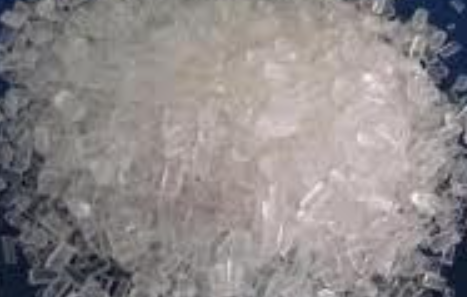
Product code RXSOL-60-6156-001
Sale Price: 540.00 INR
- Unit
- Grams
- Quantity per unit
- 500.00
Sodium Thiosulfate pure LAB GRADE materials
Molecular Formula ::: Na2S2O3 - 5H2O
Application
laboratory synthesis
In the laboratory, this salt can be prepared by heating an aqueous solution of sodium sulphite with sulphur.
Principal reactions and applications
Thiosulfate anion characteristically reacts with dilute acids to produce sulfur, sulfur dioxide and water-
1.Na2S2O3 + 2HCl →2NaCl + S + SO2 + H2O
This reaction is known as a "clock reaction", because when the sulfur reaches a certain concentration the solution turns from colourless to a pale yellow. This reaction has been employed to generate colloidal sulfur. When the protonation is conducted at low temperatures, H2S2O3 (thiosulfuric acid) can be obtained. It is a somewhat strong acid with pKas of 0.6 and 1.7 for the first and second dissociation respectively.
Iodometry
In analytical chemistry, the most important use comes from the fact that the thiosulfate anion reacts stoichiometrically with iodine, reducing it to iodide as it is oxidized to tetrathionate:
Photographic processing
The terminal sulfur atom in S2O32− binds to soft metals with high affinity. Thus, silver halides, e.g. AgBr, typical components of photographic emulsions, dissolve upon treatment with aqueous thiosulfate:
2 S2O32− + AgBr →[Ag(S2O3)2]3−+ Br−
In this application to photographic processing, discovered by John Herschel and used for both film and photographic paper processing, the sodium thiosulfate is known as a photographic fixer, and is often referred to as hypo, from the original chemical name, hyposulphite of soda.
Gold extraction
Sodium thiosulfate is one component of an alternative lixiviant to cyanide for extraction of gold.[3] It forms a strong complex with gold(I) ions, [Au(S2O3)2]3−. The advantage of this approach is th
2 S2O32−(aq) + I2(aq) →S4O62−(aq) + 2 I−(aq)
Due to the quantitative nature of this reaction, as well as the fact that Na2S2O3•5H2O has an excellent shelf-life, it is used as a titrant in iodometry. Na2S2O3•5H2O is also a component of iodine clock experiments.
This particular use can be set up to measure the oxygen content of water through a long series of reactions. It is also used in estimating volumetrically the concentrations of certain compounds in solution (hydrogen peroxide, for instance) and in estimating the chlorine content in commercial bleaching powder and water.at thiosulfate is essentially non-toxic and that ore types that are refractory to gold cyanidation (e.g. carbonaceous or Carlin type ores) can be leached by thiosulfate. Some problems with this alternative process include the high consumption of thiosulfate, and the lack of a suitable recovery technique, since [Au(S2O3)2]3− does not adsorb to activated carbon, which is the standard technique used in gold cyanidation to separate the gold complex from the ore slurry.
Technical Specifications
Other names:Sodium hyposulfite ,Hyposulphite of soda
Identifiers CAS number : 7772-98-7 Y, 10102-17-7 : (pentahydrate)
UNII :L0IYT1O31N Y
ChEMBL CHEMBL : 1201157 N
RTECS number :XN6476000
|
Molecular Formula |
Na2S2O3 |
|
Molar Mass |
158.11 g/mol |
|
Appearance |
white crystals |
|
Odor |
odorless |
|
Density |
1.667 g/cm3 |
|
Melting Point |
48.3 °C (pentahydrate) |
|
Boiling Point |
100 °C (pentahydrate, - 5H2O decomp) |
|
Solubility in Water |
76.4 g/100 g H20(20 °C) |
IUPAC name :Sodium thiosulfate
Other names:Sodium hyposulfite ,Hyposulphite of soda
Identifiers
CAS number : 7772-98-7 Y,
10102-17-7 : (pentahydrate)
PubChem: 24477
ChemSpider :22885 Y
UNII :L0IYT1O31N Y
ChEMBL CHEMBL : 1201157 N
RTECS number :XN6476000
Other Names
Chlorine control, Declor-it, Disodium thiosulfate, S-hydril, Sodium hyposulfite, Sodium oxide sulfide, Antichlor, Sodothiol, Sulfothiorine, Ametox
Precautions & Remarks
Sodium Thiosulfate solutions are almost exclusively used to standardize Iodine solutions or as back-titrants in titrations using Iodine. Solutions of Sodium Thiosulfate are most commonly standardized with Potassium Dichromate or Potassium Iodate solutions, which generate Iodine from Iodide. Starch indicator is typically used. The reaction with Iodine is:
Titrations with standard Sodium Thiosulfate solution are best conducted in the pH 5 - 9 range. Since this is not always possible, the titrations should be conducted rapidly and with adequate stirring to insure rapid reaction of the Thiosulfate, thus minimizing any acid-accelerated decomposition. This will also minimize the acid-catalyzed oxidation of Iodide (usually present in a titration involving Thiosulfate) to Iodate, which could lead to decreased accuracy.
Sodium Thiosulfate solutions are subject to bacterial decomposition and chemical deterioration. Sodium Thiosulfate solutions decompose in acid solution resulting in the evolution of Sulfur Dioxide gas and precipitation of elemental Sulfur. Contact with Carbon Dioxide in the air can produce the acidity leading to this decomposition, which is faster in more dilute Thiosulfate solutions.
Supply Locations
Sodium Thiosulfate manufacturer and supplier in Mumbai, Kandla, Kolkata, Chennai, Visakhapatnam, Fujairah, Dubai, Ajman, Abudhabi, Sharjah, Muscat, Oman.